

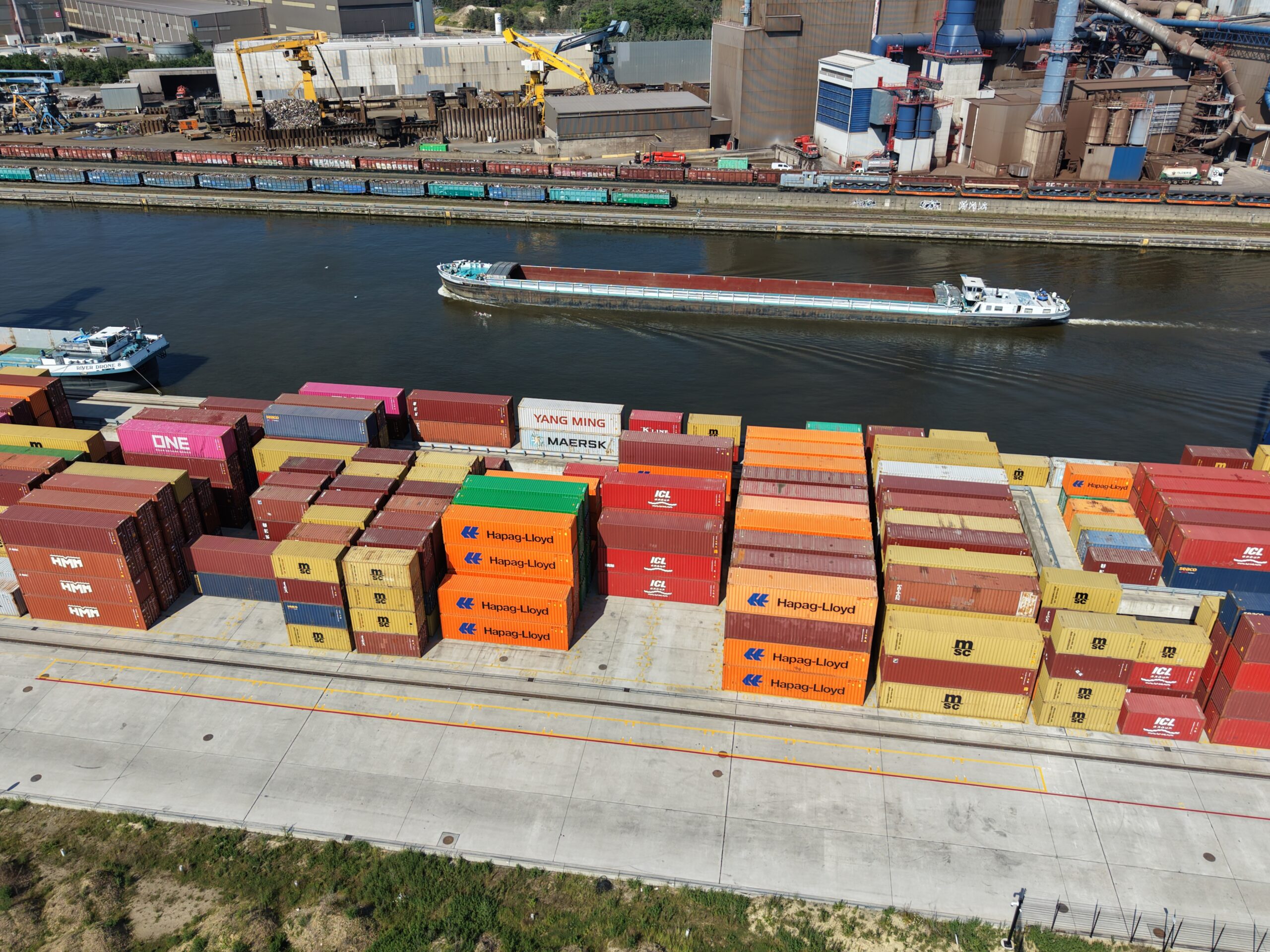
Port of Limburg takes a new step in hinterland logistics with Extended Gate
Genk, 17 September 2026 – Port of Limburg is taking a new step in the further development of hinterland logistics. With Extended Gate, import containers can be transported directly from the seaport to Port of Limburg in Genk, while the goods remain under customs supervision.
This allows containers to leave the seaport more quickly, eliminates the need to wait for customs clearance or transit documents, and enables further logistics and customs processes to be efficiently organised in Genk. You save time, create greater flexibility and gain more control over your supply chain.
How does Extended Gate work?
- Arrival at the seaport – Your import container arrives in Antwerp and is destined for Port of Limburg in Genk.
- Transport to Genk – The container is transported to Genk by inland waterway, while the goods remain under customs supervision.
- Temporary storage in Genk – The goods can be temporarily stored in the customs-approved RTO facility. They retain their non-Union customs status and remain under customs supervision.
- Further handling – The necessary customs formalities, inspections and further logistics activities can be organised in Genk. Once the required procedures have been completed, the cargo can continue to its final destination.
The benefits for your organisation
- Faster removal from the port – Your containers leave the seaport more quickly and reach the hinterland sooner.
- Greater flexibility – Customs clearance and logistics processing can be better aligned with your operational planning.
- More control – Your goods are located closer to your production, distribution or storage location.
- More efficient supply chain – By better spreading logistics activities between the seaport and the hinterland, a smoother flow of goods is created.
- Sustainable transport – Inland waterway transport is an important link between the seaport and the hinterland and helps reduce pressure on the road network.
Port of Limburg as an Extended Gate
With Extended Gate, Port of Limburg is taking an innovative step in hinterland logistics. Port of Limburg becomes an extension of the seaport, bringing goods closer to their final destination more quickly.
The first successful tests have now been completed. The first connection between the MPET terminal and Port of Limburg was established, and containers were successfully exchanged between the two terminals. Based on these positive results, the ambition is to further roll out the Extended Gate concept to other terminals and gradually develop a network of connected terminals.
In addition, possibilities are being explored to also apply the concept to export flows in the future.
Why Port of Limburg?
Port of Limburg combines a strategic location in the heart of the Euregio with inland waterway connections to the seaports, a customs-approved RTO facility and extensive logistics services.
This makes Port of Limburg an efficient solution for companies looking to organise their container flows more intelligently.
Discover what Extended Gate can mean for your supply chain.
Our specialists will be happy to work with you to explore how Extended Gate can make your logistics chain more efficient and flexible.
Port of Limburg
Your partner for multimodal units in the hinterland